Can Biocide Treatment Prevent Future Algae Growth?
Algae is the growth that turns roofs green and, over time, black, and it is one of the most persistent problems on a damp roof. Clean it off and, without protection, it tends to creep back as the tiles stay damp and shaded. So a reasonable question for anyone dealing with recurring algae is whether biocide can actually keep it from returning. The answer is encouraging: algae is exactly the kind of growth biocide handles well, though the protection is a slowing rather than a permanent stop.
This guide explains whether biocide can prevent future algae growth, why algae responds well to treatment, and what realistic protection looks like.
How Biocide Works Against Algae
Biocide prevents algae in the same way it slows moss: by staying active on the tile surface for months after cleaning and killing spores and early growth before they establish. Algae spreads through airborne spores that settle on damp surfaces and grow into a film, and the biocide interrupts this by making the surface hostile to those spores as they arrive.
For algae specifically, this works particularly well. Because algae grows as a thin film on the surface rather than anchoring deep into the tile, the biocide reaches and acts on it readily. New algae trying to establish on a treated roof meets a surface that kills or inhibits it before the film can develop, so the green and black staining that would otherwise return is held back. A
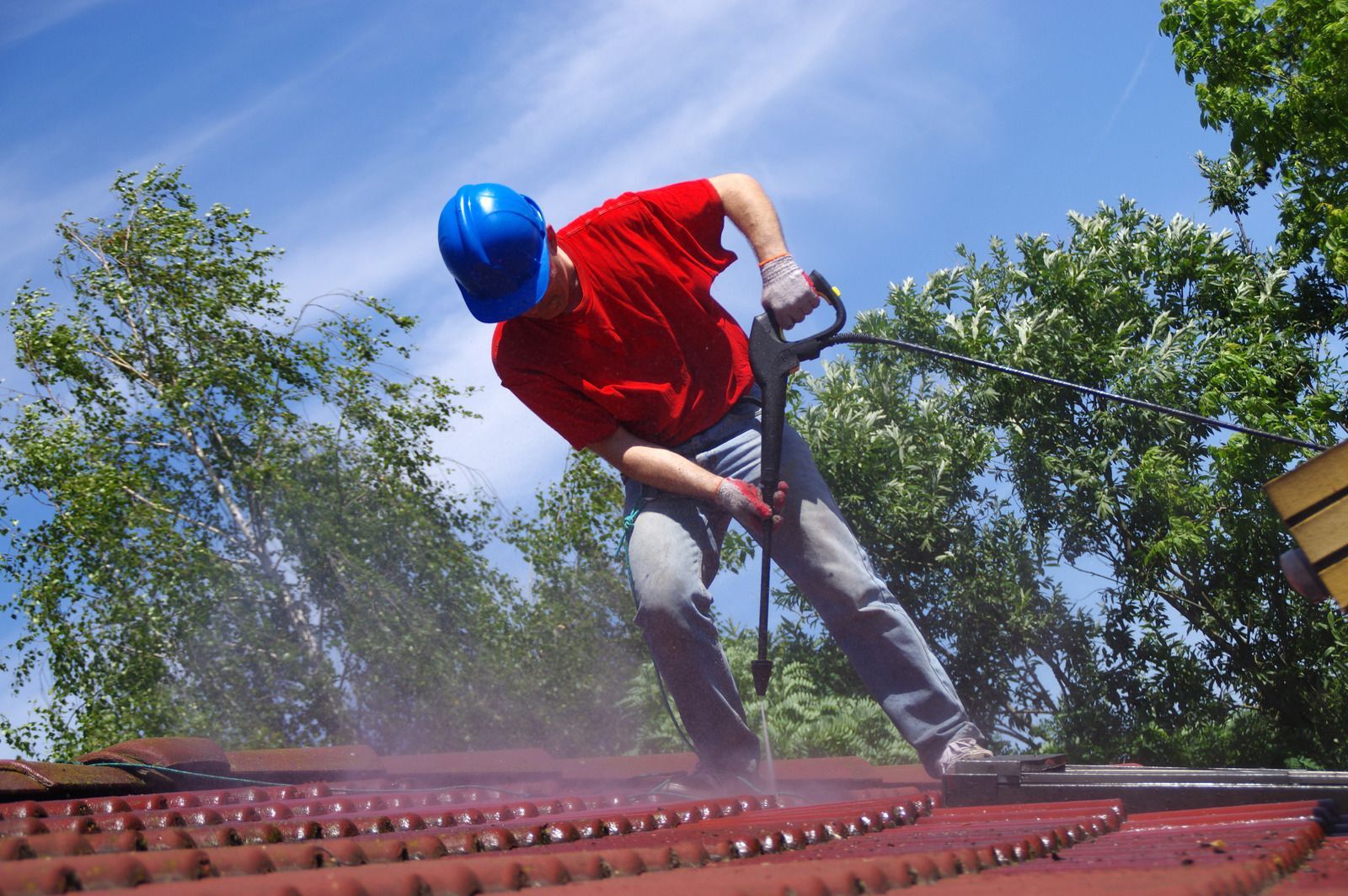
Roof Cleaning with biocide aftercare targets algae effectively at the point it tries to regrow.
Why Algae Responds Especially Well
It is worth understanding why algae is a good match for biocide protection compared with, say, lichen. Algae is a surface film. It sits on the tile rather than gripping into it, so both cleaning and the biocide can reach it fully. Lichen, by contrast, anchors deep into the tile with root-like structures, which is why it is more stubborn and relies more heavily on repeated biocide action over time.
Algae's surface-level habit means the biocide can act on it directly and thoroughly, both killing what remains after cleaning and inhibiting new film as it forms. This is why treated roofs so often stay free of the green and black algae staining for a good while, the treatment is well suited to the way algae grows. The result is a roof that resists the return of that dull, streaked, discoloured look far longer than an untreated one.
Tip: If black algae staining is your main concern, a biocide is especially worth having, because the dark pigment that blackens roofs comes from algae, and biocide both helps clear residual staining and slows its return. A cleaned-and-treated roof keeps its restored colour far longer than one cleaned without protection.
Prevention, Not a Permanent Cure
Realistic expectations matter, so it is important to be clear that biocide slows algae's return rather than stopping it forever. The shade, damp, and airborne spores that grow algae remain, and the biocide's protective effect fades gradually over months as weather wears it. Eventually, without renewal, algae can begin to re-establish.
This is not a shortcoming so much as the nature of the problem. Nothing keeps a roof permanently free of algae given the conditions that feed it, but biocide is the most effective way to keep it clear for far longer than cleaning alone. Renewing the protection with occasional top-ups, before it fades enough for algae to return, keeps the roof protected on an ongoing basis. Keeping the Gutter Cleaning clear helps the roof dry faster, reducing the dampness algae depends on.
Getting the Most Algae Protection
To get the longest protection against algae, the biocide works best as part of a fuller approach. Cleaning first removes the existing algae film, then the biocide is applied to the cleared surface to slow the return. Reducing the conditions algae needs helps too: cutting back overhanging branches lets in light and air so the roof dries faster, and clearing debris removes the damp and nutrients algae feeds on.
Together, a biocide that inhibits new film, a roof that dries faster, and occasional top-ups to renew the protection keep algae staining at bay for the longest. In our 15 years on Sussex roofs, algae is one of the most common problems the damp climate produces, and biocide protection is consistently the most effective way to keep the green and black staining from coming straight back.
Biocide treatment cannot stop algae forever, but it significantly slows its return by keeping the tile surface hostile to new growth for months after cleaning. Algae responds especially well to biocide because it grows as a surface film rather than anchoring deep, so the treatment reaches it readily. Combined with cleaning, a biocide keeps green and black algae staining from returning as quickly, though top-ups maintain the protection over time.
Frequently Asked Questions
Does biocide stop algae coming back permanently?
No, it slows the return rather than stopping it forever. The shade, damp, and airborne spores that grow algae remain, and the biocide's protection fades gradually over months. But biocide is the most effective way to keep algae clear for far longer than cleaning alone, and renewing it with occasional top-ups maintains that protection on an ongoing basis. Realistic protection is a significant slowing, not a permanent cure.
Why does algae respond better to biocide than lichen?
Because algae grows as a surface film that sits on the tile, so the biocide can reach and act on it fully. Lichen anchors deep into the tile with root-like structures, making it more stubborn and reliant on repeated biocide action over time. Algae's surface-level habit means the treatment kills residual film and inhibits new growth readily, so algae protection tends to be effective and lasting.
Will biocide stop my roof turning black again?
It will significantly slow it. The black staining on roofs comes from algae producing a dark pigment, and biocide both helps clear residual staining after cleaning and inhibits the algae from re-establishing. So a cleaned-and-treated roof keeps its restored colour far longer than an untreated one. The blackening can eventually return as protection fades, which is why top-ups help maintain the clear finish.
How long does biocide keep algae away?
It varies with shade, tree cover, tile type, and climate, but biocide keeps algae clear for well beyond a single cleaning cycle, with damp, shaded roofs seeing protection fade sooner. Watching the shaded slopes for the first faint return of green film shows when protection is weakening. Occasional top-ups renew it before algae can re-establish, maintaining the clear finish over time.
Do I still need to clean the roof if I use biocide?
Yes. Biocide is designed to prevent the return of algae on a cleared surface, not to remove an established film. The existing algae must be removed by cleaning first, then the biocide slows its return. Over time, as protection fades and some regrowth occurs, a further clean and fresh biocide renew the result. Cleaning and biocide work together; the biocide is the preventative half.
Keep algae staining from returning — Book a no-contact clean with a non-toxic biocide that slows green and black algae. Ben's Roof Cleaning includes a free inspection and patch test. Call 0120 208 4808.
Slowing Algae for the Long Term
Can biocide treatment prevent future algae growth? It cannot stop it forever, but it significantly slows the return, and algae is especially well suited to biocide protection because it grows as a surface film the treatment can reach fully. Applied after cleaning, a biocide keeps the tile surface hostile to new algae for months, holding back the green and black staining that would otherwise creep back on a damp, shaded roof. The protection fades over time, so top-ups renew it, and reducing shade and damp helps. For a roof prone to algae, biocide is the most effective way to keep the staining from coming straight back.